
Move-Up Buyer's Guide to Dilworth, Charlotte
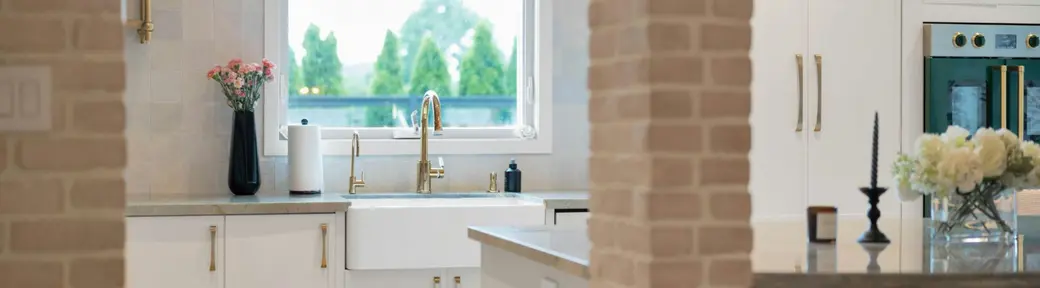
Making the leap from your first home to Dilworth costs most buyers somewhere between $500,000 and well over $1 million, depending on the property type, lot size, and level of historic renovation. If your equity has grown and your family's needs have outgrown your current space, Dilworth is one of Charlotte's most supply-constrained in-town neighborhoods, and one of the clearest upgrade destinations in the city. Here's how to navigate the transition without losing your mind or your deposit.
Why Dilworth Makes Sense for Move-Up Buyers
Dilworth earns its premium because it consistently delivers what buyers who have already owned a home actually want: character that new construction cannot replicate, walkability you can use every day, and a school assignment that holds long-term resale value.
Charlotte's first planned streetcar suburb, established in the 1890s, the neighborhood sits roughly two miles south of Uptown. East Boulevard's restaurant corridor, Latta Park's 31 acres, and Freedom Park nearby give residents the kind of everyday lifestyle that turns a house purchase into a genuine upgrade. Dilworth Elementary is a top-rated Charlotte-Mecklenburg Schools campus, and high school assignment typically feeds to Myers Park High, another A-rated school.
According to the Charlotte Regional Business Alliance, the Charlotte region gained more than 49,000 new residents through net migration in the twelve months ending July 2025, averaging roughly 135 arrivals per day. Much of that demand concentrates in in-town neighborhoods with strong walk scores and school ratings, exactly the profile Dilworth holds.
For Dilworth homes specifically, aggregated MLS listing data (three months ending June 2026) puts single-family activity in the $500,000-to-$1 million range for smaller and mid-size renovated bungalows, with estate-scale renovated properties carrying $1 million-plus price tags. New construction and high-end infill regularly breach $1.5 million.
What the Dilworth Market Is Actually Doing Right Now
As of June 2026, the Dilworth market backdrop is steady: Mecklenburg County homes averaged 41 days on market and sellers received 97% of original list price, signaling a market that rewards well-priced listings without the frenzy of 2021.
Per Canopy MLS data published July 29, 2026, the 16-county Charlotte region recorded a median sales price of $416,893 in June 2026, up 0.5% year over year, with Mecklenburg County coming in at $470,000, up 1.1%. The table below puts the key metrics side by side:
| Metric | Charlotte Region (June 2026) | Mecklenburg County (June 2026) |
|---|---|---|
| Median sales price | $416,893 (+0.5% YoY) | $470,000 (+1.1% YoY) |
| Average sales price | $552,988 (+3.7% YoY) | $680,544 (+6.9% YoY) |
| Days on market | 47 days (vs. 43 a year ago) | 41 days (vs. 34 a year ago) |
| List price received | 96.3% of original list | 97.0% of original list |
| Inventory change | +5.6% YoY (13,082 homes) | +9.5% YoY (4,403 homes) |
| Months of supply | 3.6 months | 3.4 months |
In plain terms: the sprint is over, but the market is not soft. Well-priced homes are still moving, sellers are still receiving near-asking prices, and inventory, while growing, remains well below the six-month supply level associated with a balanced market. For move-up buyers, that means:
- Selling your current home is still realistic at a strong price, especially if it is priced correctly from the start.
- Buying in Dilworth still requires speed and a clean offer, because tight inventory keeps well-priced listings competitive.
The Canopy Realtor® Association also reported that in January 2026, Charlotte region sellers received 95.1% of their original list price, consistent with the trajectory through the first half of the year. That figure matters when you're calculating your sale proceeds to fund your next down payment.
Explore Dilworth homes and area details for a closer look at what's currently available and where properties are sitting in the market.
The Sell-First vs. Buy-First Decision
For move-up buyers, there is no universal right answer here; the best path depends on your equity position, risk tolerance, and how competitive the Dilworth listing you want actually is.
Sell first if you need a clean, calculable down payment before you can qualify for a Dilworth mortgage, or if your current home requires a sale contingency to close the gap. The downside is that you may need temporary housing between transactions, and you lose some negotiating leverage when writing a contingent offer on the Dilworth property.
Buy first if you have enough liquid equity or can access it through a bridge loan or HELOC before your current home lists. Bridge loans typically run six to twelve months and carry higher rates than conventional mortgages. Payment structures vary by lender: some bridge loans defer all payments until the property sells, while others require interest-only monthly installments with the remaining balance due at closing.
The advantage of going this route is that you can write a non-contingent offer on the Dilworth property, which sellers strongly prefer, especially in a neighborhood where listing inventory is limited and multiple-offer situations still emerge on well-priced homes.
A few practical notes on bridge financing and timing:
- Most lenders will not open a HELOC on a property that is already listed for sale. If a HELOC is part of your strategy, it needs to be established before your current home goes on the market.
- The IRS Section 121 exclusion allows married couples filing jointly to exclude up to $500,000 in capital gains from the sale of a primary residence, provided they meet the two-of-five-year ownership and use tests. For single filers, the exclusion is $250,000. North Carolina taxes capital gains as ordinary income at its flat 3.99% rate in 2026. If your current home has appreciated significantly, factor in how much of your gain clears the exclusion before you build your cash-flow assumptions.
- A simultaneous close, where your sale and your Dilworth purchase settle on the same day or within a few days of each other, is achievable with careful coordination. It requires a lender who can underwrite both transactions in parallel and a contract timeline on the buy side that leaves enough buffer for your sale to close.
Use the mortgage calculator or affordability calculator to model the different scenarios, running both the "sell first, cash out" path and a bridge-loan path, before you meet with a lender.
What Your Budget Buys in Dilworth
Dilworth homes span three price bands: $500K–$1M for renovated bungalows and smaller single-family homes, $1M+ for fully updated historic properties and high-end infill, with specific pricing varying significantly by condition, lot, and client situation.
$500,000–$1 Million. This is the entry-to-mid range for Dilworth. At the lower end of this band, buyers typically find smaller renovated bungalows, condominiums in historic conversions, and well-maintained attached townhomes within or adjacent to the neighborhood. The mid-portion, roughly $700,000 to $900,000, opens up single-family Craftsman and cottage homes on standard Dilworth lots. Historic character, original hardwood floors, and front porch living are common at this tier, but buyers should expect some trade-offs in square footage or kitchen and bath renovation status.
$1 Million and Above. This tier unlocks the larger, fully renovated historic homes on wider lots, estate-scale properties, high-end new infill construction, and custom builds designed to complement the neighborhood's Local Historic District guidelines. Dilworth's price-per-square-foot premium reflects scarcity, not luxury amenity in isolation: the stock of eligible historic homes is finite, and the neighborhood's development rules protect that character, which in turn sustains long-term values.
Varies by Client. Condition, lot orientation, proximity to East Boulevard, and renovation quality create wide spreads even within the same price band. Two $800,000 homes on different Dilworth blocks can have very different upkeep profiles and school-zone details. Working with someone who knows the specific inventory matters here more than the headline number.
For reference, the Luxury Collection listings and curated selection pages can help you anchor expectations to what's actively on the market right now.
Preparing Your Current Home to Sell
In the current Mecklenburg market, condition and pricing accuracy are the two variables most within a seller's control, and both matter more now than they did in 2021.
Price it right the first time. Sellers across Mecklenburg County received about 97% of original list price in June 2026 per Canopy MLS data, but that average hides a gap: homes that are overpriced sit longer, eventually require reductions, and signal to buyers that something is off. Overpricing in a normalizing market is a more costly mistake than it was in 2021.
Condition matters more now. With days on market up roughly seven days year-over-year in Mecklenburg, buyers have enough time to be selective. A home with deferred maintenance or dated finishes in the $400,000–$600,000 starter price band will face comparison from a growing condo and townhome inventory. Make the targeted improvements, kitchens, baths, curb appeal, that actually move the needle rather than renovating for renovation's sake.
Understand your timeline. Per Canopy MLS data, the average list-to-close timeline across the Charlotte region was approximately 114 days in January 2026, dropping to 93 days region-wide by June 2026, with Mecklenburg homes spending an average of 41 days on market before going under contract. Build your Dilworth offer timeline around a realistic closing date, not an optimistic one.
A home valuation and seller information or your Sellers' Roadmap can help you get a current read on what your existing property is worth before you commit to a Dilworth purchase price.
The Dilworth Lifestyle - What You're Actually Upgrading To
Dilworth delivers four concrete lifestyle advantages that new-construction suburbs rarely replicate: walkability, school stability, historic district protection, and Uptown proximity at residential scale.
Walkability. Dilworth consistently posts one of the highest Walk Scores in Charlotte. Restaurants, coffee, groceries, and Latta Park are within a reasonable walk from most addresses. For buyers currently commuting by car to everything, this is a genuine lifestyle change.
School stability. Dilworth Elementary has a strong reputation within Charlotte-Mecklenburg Schools, and the Myers Park High assignment is among the most consistently valued in the district. For families making a ten-plus-year home purchase decision, school stability is a meaningful input.
Historic district protections. Dilworth's Local Historic District designation means neighbors cannot tear down adjacent structures and replace them with something incompatible. That regulatory layer is part of what preserves value over time, and it's something buyers coming from newer suburban construction rarely encounter.
Proximity without the density. Dilworth is two miles from Uptown but feels like a genuine neighborhood, not a downtown extension. That balance, urban access with residential scale, is what the $500,000-to-$1-million-plus premium is actually paying for.
If you're evaluating neighboring in-town options alongside Dilworth, Myers Park, Plaza Midwood, and South End each have distinct price profiles and lifestyle trade-offs worth comparing before you commit. The table below summarizes the key differences:
| Neighborhood | Typical Price Range | Housing Stock | Key Trade-off |
|---|---|---|---|
| Dilworth | $500K–$1M+ | Historic bungalows, some infill | Premium pricing for historic character and lot size |
| Myers Park | $700K–$2M+ | Larger traditional homes, generous lots | Higher entry price, more formal residential character |
| Plaza Midwood | $400K–$800K | Bungalows, cottages, some new construction | Lower entry price, denser feel, evolving retail corridor |
| South End | $350K–$700K | Condos, townhomes, light-rail proximity | More attached housing, younger demographic, less green space |
Your Move-Up Action Checklist
A practical sequence for Dilworth move-up buyers:
- Get pre-approved for the Dilworth purchase before you list your current home. Understand what you qualify for with and without your current home's equity included.
- Request a market valuation on your current home so you know your realistic net proceeds after costs, mortgage payoff, and any applicable capital gains.
- Decide on your sequencing strategy, sell first, buy first with a bridge loan, or a simultaneous close, based on your equity position, risk tolerance, and lender input.
- Prepare your current home for market, prioritizing condition improvements that are most relevant to your buyer pool and price range.
- Begin actively touring Dilworth, using Charlotte area listings to calibrate market context and Dilworth area details for inventory depth.
- Build a timeline buffer. Even if your current home goes under contract quickly, the Dilworth seller needs a clear closing date. Pad your assumptions.
Frequently Asked Questions - Move-Up Buyer in Dilworth, Charlotte
-
What does a move-up home in Dilworth, Charlotte typically cost? Dilworth single-family homes generally range from the high $500,000s for smaller renovated bungalows to well over $1 million for larger, fully updated historic properties or high-end infill new construction. Condominiums and townhomes within or adjacent to Dilworth typically enter at lower price points. Pricing varies significantly based on lot size, renovation quality, and exact location within the neighborhood, and buyers in the same price band can find meaningfully different properties depending on their specific priorities and trade-offs.
-
Should I sell my current home before buying in Dilworth? Not necessarily. Move-up buyers with substantial home equity have a few paths: sell first and buy with clean proceeds, use a bridge loan to buy before selling, or target a simultaneous close coordinated with the right lender and agent. Each path has trade-offs around timing, cost, and negotiating position. A bridge loan, for example, lets you write a non-contingent offer on a Dilworth property, which sellers tend to prefer, but payment structures vary: some bridge loans defer all payments until your current home sells, while others require monthly interest-only installments with the full balance settled at closing.
-
Will I owe capital gains tax when I sell my starter home? Possibly, depending on how much your home has appreciated. The IRS Section 121 exclusion allows married couples filing jointly to exclude up to $500,000 in gains from the sale of a primary residence, and single filers can exclude up to $250,000, provided the two-of-five-year ownership and use tests are met. Gains above those thresholds are taxable. North Carolina taxes capital gains as ordinary income at a flat 3.99% rate in 2026. If you have held a Charlotte home through the appreciation years, it is worth running the numbers with a tax advisor before you assume the proceeds are fully yours to deploy.
-
Is Dilworth a good long-term investment for families? Dilworth's combination of a Local Historic District designation, strong school assignments, walkability, and proximity to Uptown Charlotte supports long-term demand. The neighborhood has demonstrated consistent price appreciation relative to the broader Charlotte market, and its regulatory protections limit the supply changes that tend to erode character over time. That said, no specific return can be guaranteed, and buyers should evaluate the home as a place to live first, with the investment case as a secondary consideration.
-
How competitive is the Dilworth buyer market right now? Dilworth remains a supply-constrained neighborhood, meaning inventory is limited relative to demand. In the broader Mecklenburg County market, homes spent an average of 41 days on market in June 2026 per Canopy MLS data, and sellers received about 97% of original list price. Well-priced, well-maintained Dilworth listings, particularly in the $500,000–$1 million single-family range, tend to attract multiple interested buyers and move faster than the county average. A clean, non-contingent offer remains a meaningful competitive advantage.
-
What neighborhoods are comparable to Dilworth for move-up buyers? Myers Park, Plaza Midwood, and South End each represent distinct alternatives to Dilworth, with different price points, housing stock profiles, and lifestyle trade-offs. Myers Park generally carries higher price points and a more formal residential character. Plaza Midwood offers a similar walkable, neighborhood feel at a lower entry price. South End skews younger, with more attached housing and light-rail proximity. Reviewing all four before committing gives move-up buyers a clearer picture of what Dilworth's premium is actually buying.
Recent Posts