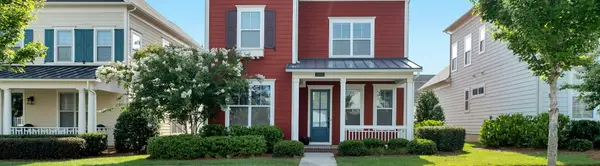
Selling a Starter Home in Charlotte: Maximize Proceeds

Selling a starter home in Charlotte is most profitable when the price, presentation, and offer strategy reflect the homes buyers can compare. Sellers preparing to move locally or regionally should focus on protecting net proceeds, not simply selecting the highest possible list price. A disciplined plan accounts for the property's condition, competing listings, buyer search thresholds, closing costs, and the terms attached to each offer.
The result is a clearer launch strategy and fewer expensive decisions made after the home is already on the market.
How to Read the Charlotte Starter-Home Market
The Charlotte starter-home segment is best measured at the property level because lower-priced options vary widely by neighborhood, housing type, association structure, and condition. Citywide figures still set the backdrop. In August 2026, the median sales price in the City of Charlotte was $427,500, up 0.6% from a year earlier, and homes averaged 47 days on market compared with 44 days last August.
For pricing decisions, sellers should look past the citywide figure and review four current indicators for closely matched homes: recent sale prices, marketing time, active supply, and the gap between asking and accepted prices.
For a specific home, the strongest market snapshot compares similar closed sales with active and pending alternatives in the same buyer search area. That approach shows where a home fits in the market and whether its launch price needs to create immediate attention or allow more room for negotiation.
Selling a Starter Home in Charlotte: Current Market Conditions
Charlotte's starter-home market is most competitive when a home is well presented, positioned within a recognizable buyer search range, and supported by nearby sales. Buyers in this segment tend to compare monthly ownership costs, layout, parking, usable outdoor space, association obligations, and visible maintenance needs closely before deciding whether to act.
Supply has been building. Inventory in the city reached 3,737 homes for sale in August, up 15.7% from a year ago, and months of supply rose from 3.1 to 3.7. Buyers have more to compare, and sellers in the city received about 95.9% of their original list price, so launch pricing and condition matter more than they did when inventory was tighter.
A starter home does not have one fixed price band across Charlotte. In one part of the city, buyers may compare townhomes or condominiums. In another, the alternatives may be older detached homes with different lot sizes, update levels, and association obligations. The pricing analysis should begin with recent nearby closings, then test that evidence against active and pending homes that buyers can choose instead.
A home can lose early momentum when its asking price overlooks condition differences or lands just above a key search threshold. New listings matter as well, particularly when several similar homes enter the market during the same launch window.
A seller should treat the first days on market as a comparison period, not a waiting period. Local context for the Charlotte market helps frame the picture, while a property-specific analysis identifies the homes that will shape buyer decisions most directly.
How Charlotte Starter Homes Compare With Other Buyer Choices
Charlotte starter homes are best compared with the alternatives available to the same buyer, rather than with broad averages that combine very different property types and price bands.
Attached homes are a large part of that comparison. Across the Charlotte area in August 2026, the median townhome price was $350,000 and the median condo price was $292,000, and months of supply reached 4.4 for townhomes and 5.8 for condos, compared with 3.5 for single-family homes. For a detached-home seller, that deeper attached inventory gives buyers lower-priced alternatives, which makes condition, parking, outdoor space, and association costs stronger differentiators.
A useful seller comparison includes recently closed homes, active listings, and pending contracts with similar square footage, age, layout, condition, parking, and association structure. This approach shows whether a home is entering a relatively competitive set of choices or needs stronger positioning through price, preparation, or presentation.
For sellers, the practical question is whether a Charlotte buyer can find a comparable home with better condition, more space, lower association costs, or a more attractive price. That is the comparison set a launch strategy must beat.
Selling a Starter Home in Charlotte: Pricing for Net Proceeds
The strongest Charlotte starter-home price is the one supported by comparable sales and credible enough to create prompt buyer attention. A comparative market analysis should begin with recent closed homes, then account for active and pending listings that reveal what buyers can choose at the moment of launch.
Overpricing can be costly in a price-sensitive segment because many buyers use firm online search ceilings. A property priced just above a common threshold may reach fewer qualified buyers, even when the difference appears small. If the market evidence supports a value near $500,000, for example, pricing at $499,000 may place the home within more relevant searches than $505,000 while remaining consistent with its features and location.
The purpose is not to list below value automatically. It is to choose a number that reflects condition, updates, layout, location, and the immediate alternatives buyers will weigh. With city sellers receiving roughly 96% of their original list price, the gap between launch price and final price is worth planning around. The best pricing decision also considers the seller's timing, expected costs, and desired proceeds from the next move.
It also helps to work through the pre-listing questions that should be resolved before a launch price is finalized.
Preparing a Charlotte Starter Home to Compete
The highest-return preparation for a Charlotte starter home is usually visible, practical, and proportionate to the property's price range. Buyers notice clean surfaces, bright rooms, functioning fixtures, maintained exterior details, and spaces that are easy to understand in photographs. They may not place the same value on a costly renovation tailored to one owner's personal taste.
Start with marked walls, worn caulk, loose hardware, mismatched light bulbs, and heavily used surfaces. Neutral paint touchups, consistent lighting, refreshed cabinet hardware, and a clean entry can improve first impressions without changing the home's character. In Charlotte's climate, trimmed landscaping, cleared gutters, tidy exterior storage, and a usable patio or deck can also make the property feel more cared for before buyers enter.
Inside, remove excess furniture, clear counters, and give every room a clear purpose. A flex room should read as an office, guest room, or exercise space rather than storage. Professional photography and accurate listing copy should show room scale, storage, parking, outdoor areas, and practical features buyers may otherwise overlook.
Skip slow, highly personalized projects unless comparable homes demonstrate that the work is necessary for the intended price range. The goal is a polished, credible presentation that helps buyers understand the home's value quickly.
The Starter-Home Seller's Prep Checklist
- Set the launch price from closely matched recent Charlotte sales.
- Clear counters, closets, and walkways before photography.
- Refresh marked paint, worn caulk, and loose hardware.
- Brighten rooms with consistent bulbs and open window coverings.
- Improve the entry, landscaping, gutters, and outdoor living areas.
- Define each room's purpose with simple staging.
- Gather association documents, warranties, and utility information.
- Use professional photography and precise listing copy.
Charlotte Seller Disclosure and Legal Requirements
North Carolina sellers of most one-to-four-unit residential properties must provide a Residential Property and Owners' Association Disclosure Statement before a buyer makes an offer, subject to statutory exemptions. The disclosure framework is governed by North Carolina General Statutes Chapter 47E.
A separate Mineral and Oil and Gas Rights Mandatory Disclosure Statement is also required in most of the same transactions. When a property is governed by an owners' association, sellers should prepare applicable association information early so that required documents can be delivered on an organized timeline.
A common first-time seller mistake is treating disclosure paperwork as a one-time task. Sellers should update their responses if they learn material information before closing, rather than assuming an earlier form remains complete in every circumstance. Clear, accurate responses help reduce confusion and support a smoother attorney-led closing process.
Charlotte sellers should also confirm property-specific association requirements, tax records, and closing documents with the professionals handling their transaction. The governing requirements may vary with the home's ownership structure and the terms of the contract.
Selling a Starter Home in Charlotte: Understanding Net Proceeds
Net proceeds equal the contract price minus negotiated compensation, state transfer charges, attorney and title-related costs, tax prorations, association charges where applicable, seller concessions, and any mortgage payoff. The exact result depends on the property, closing date, and negotiated terms, so a written net sheet is more useful than a broad percentage estimate.
North Carolina's excise tax is fixed at $1 for each $500 of consideration or value, including any fractional part. On a hypothetical $500,000 sale, that calculation is $1,000. The tax is established by North Carolina General Statutes § 105-228.30.
Compensation is negotiable, and legal, title, association, and tax-proration charges vary by transaction. Property taxes should be calculated using the specific parcel and closing date because the amount depends on the tax bill and timing within the billing cycle.
For example, a $500,000 contract price does not by itself tell a seller what they will receive. The net sheet should subtract the $1,000 excise tax, negotiated compensation, the property's actual prorations, any agreed seller credits, and applicable closing charges. Update that sheet whenever an offer term changes so the decision remains focused on cash proceeds rather than headline price.
Estimated Seller Closing Costs in Charlotte
| Cost Item | What Determines It |
|---|---|
| Negotiated real estate compensation | Varies by the listing agreement and marketing plan |
| North Carolina excise tax | $1 per $500 of value or fractional part, about $1,000 on a $500,000 sale |
| Owner's title policy | Varies by sale price and selected coverage |
| Closing attorney and settlement services | Varies by transaction complexity and provider |
| Prorated property taxes | Depends on parcel, tax bill, and closing date |
| Recording-related charges | Depends on transaction documents |
| Owners' association charges | May apply when the property is association-governed |
| Total estimated cost | Determined through a property-specific net sheet |
The excise-tax calculation is set by North Carolina law. Other costs should be confirmed through transaction-specific written estimates before the property is listed.
Reviewing Charlotte Offers and Negotiating Smart
The best offer is the one most likely to deliver the strongest dependable net, not necessarily the highest headline price. Sellers should compare the purchase price with financing strength, earnest money, requested seller concessions, closing timeline, and any terms that could reduce expected proceeds.
A side-by-side net sheet makes the decision more practical. A higher offer with a substantial seller credit may produce less cash than a slightly lower offer with fewer deductions. A longer closing timeline can also increase carrying costs and affect the seller's next move.
When multiple offers arrive, prioritize terms that improve both certainty and proceeds. Strong earnest money, a workable closing date, limited seller concessions, and clear communication can strengthen an offer considerably. When there is only one offer, sellers can still negotiate the terms that affect the bottom line rather than concentrating only on the purchase price.
Pro-Tip: The costliest first-time seller mistake is accepting a headline price without calculating every deduction. Prevent it by reviewing a written net sheet for each offer before responding, including concessions, taxes, and transaction-specific charges.
Ready to Maximize Your Proceeds in Charlotte?
Selling a starter home in Charlotte requires a pricing decision that matches the property's condition, buyer alternatives, and the proceeds needed for the next move. Broker-owner David Lee of Luxe By Lee Real Estate & Investments is licensed in North Carolina and South Carolina and works with sellers on home preparation, pricing strategy, listing presentation, marketing, and negotiation. For a no-obligation home-value discussion and a seller strategy tailored to your property, call or text +1 (704) 502-5807, email david.lee@luxebyleerei.com, or reach out through the contact page.
Frequently Asked Questions
What is the best time of year to sell a starter home in Charlotte?
The best time to list is when the home is prepared, accurately priced, and positioned against the active listings buyers will compare. Spring can highlight outdoor features, but a well-presented Charlotte home can attract serious interest in other seasons when its price and presentation are aligned.
How much does it cost to sell a home in Charlotte?
Selling costs vary with negotiated compensation, attorney and title services, tax proration, association charges, seller concessions, and the property's closing date. One fixed state charge is the North Carolina excise tax of $1 for every $500 of value, which equals $1,000 on a $500,000 sale under North Carolina General Statutes § 105-228.30.
How long does it take to sell an entry-level home in Charlotte right now?
In August 2026, homes in the City of Charlotte averaged 47 days on market before an offer was accepted. Across the Charlotte area, homes priced between $400,001 and $500,000 averaged 56 days, and the full timeline from listing to closing averaged about 100 days. Recent pending and closed homes in the immediate buyer search area provide the most useful benchmark for an individual property.
Should I make repairs before listing my starter home in Charlotte, or sell as-is?
Prioritize visible, practical improvements that make the home feel clean, bright, and maintained, such as paint touchups, consistent lighting, exterior cleanup, and decluttering. Major personalized projects are usually less effective unless comparable sales show they are necessary to support the intended price range.
How do I find out what my Charlotte starter home is worth before I list?
A comparative market analysis based on recent sales, pending homes, and active listings can establish a supportable price range and estimated net proceeds for the property. The analysis should compare location, size, condition, layout, features, and the alternatives available to buyers at launch.
Recent Posts